

Nature as Co-Author
What happens when writing stops being something you do on your own.

I didn’t always write this way. Curious and content.
There was a time when writing felt like a sealed room. A desk. A chair. A page that waited for me to prove something. Where I had to produce something or die. Where I had to be good enough but never was.
Nature, if it appeared at all, was decoration. A view from a window. Somewhere I went to avoid the work but the work was always in my head so my body was left out in the cold.
Now, I know better.
Now, I write with the door open. Sometimes literally. Often metaphorically.
And I no longer think of nature as inspiration in the vague, romantic or spiritual sense. I think of it as something far more practical, more demanding, more generous. More connected to my DNA.
I think of nature as co-author.
The shift didn’t arrive with a grand revelation. It came the way most real changes do—through necessity.
When energy became something unreliable and all that I could think of. When forcing words felt like harming my body. When the old rules of productivity stopped working. I had actually stopped working and stopped dreaming. I’d become a chronic shadow of illness.
Nature never left me, it hung around until eventually, I began seeing. I became curious. I stopped, I sat. Instead of striving to keep going. Noticing instead of solving.
And something unexpected happened.
My writing worked with me instead of against me.
Something had changed.
Sentences began to arrive differently—less clenched, more shaped. Ideas no longer needed to be dragged onto the page; they arrived already carrying their own weight.
I wasn’t even trying. And I wasn’t doing it all on my own.
When I say nature is my co-author, I don’t mean that the trees whisper plot twists or the river hands me perfect metaphors.
I mean this:
Nature regulates me.
It steadies my nervous system when my mind is spiralling.
It slows the frantic part of me that wants certainty too early.
And in doing so, it changes the quality of my attention.
Because writing isn’t primarily a problem of discipline or talent.
It’s a problem of attention.
What kind of attention do you bring to the page?
Tight or spacious?
Fearful or curious?
Rushed or listening?
There’s a path near where I live that runs into woodland and then thins into open land.
One winter afternoon, I was stuck. A chapter that refused to resolve. I wanted it clear. I wanted it done.
Instead, I stood watching snow melt from one side of a stone wall while the other side stayed white. The thaw was uneven but didn’t need resolved. There was no sense of urgency.
A thought came to me. The chapter didn’t need solving. It needed time in two temperatures.
Research in environmental psychology supports this intuitive knowing. Studies on Attention Restoration Theory show that natural environments restore our capacity for directed attention—something writing rapidly depletes.
Neuroscience also tells us creativity flourishes when the nervous system is regulated. Time in nature reduces cortisol and calms the brain systems responsible for threat.
This isn’t indulgence.
It’s infrastructure. It’s connection. Without this connection we are nothing more than brains trying to produce words.
Questions to sit with:
Where do you believe your writing comes from?
What happens in your body when you sit down to write?
Where do your clearest thoughts arrive?
If nature were truly your co-author, what would need to change?
A gentle prompt:
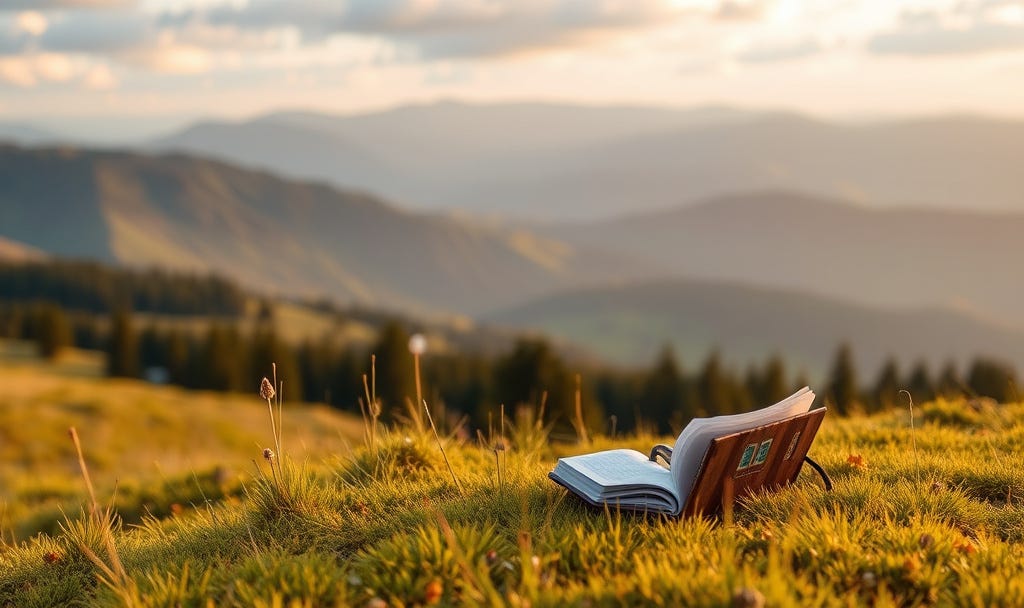
Take your notebook outside.
Notice edges—where light meets shadow, land meets water, sound fades.
Then write:
What is forming here, even if it isn’t finished yet?
Nature as co-author isn’t about aesthetic writing.
It’s about relational writing.
Writing that emerges from being in conversation—with place, with body, with time.
Most writers don’t get stuck because of a lack of discipline or motivation or talent.
They stall because the writer is thinking they are carrying the weight of their work on their own.
I’d love to hear how this lands for you.
Do you already write this way?
Do you resist the idea?
Does it feel like permission—or trouble?
Let’s talk and share our experiences, make connections. Write Wild.
I love the idea of nature as coauthor - such a beautiful way to view that relationship. I find time in nature very grounding, it definitely helps with regulation and I often find it helps something loosen inside me, whether it be a block on a writing project or some other tension or challenge in life. Thank you for this piece.
I think, with poetry, I almost always write this way. At the moment I go out to listen and to notice small things happening. My theme is "listening to what the world is saying". By world I mostly mean the other-than-human world. Essay writing is as much about research and about the above.